
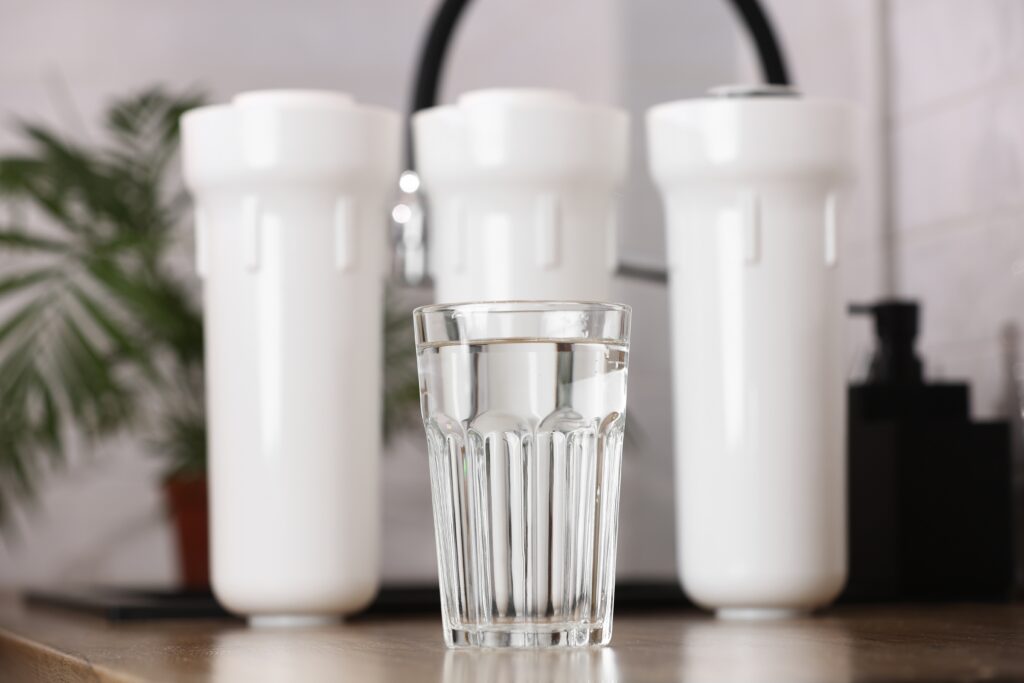
• Whole-house water filtration treats water before it reaches fixtures throughout your home.
• A point-of-use water filter focuses treatment on one location, such as the kitchen sink.
• Some homes benefit from using both systems based on their water quality and treatment goals.
Choosing between whole house water filtration and a point-of-use water filter starts with understanding where you want treatment to happen. One system provides broader coverage throughout the home, while the other focuses on water from a specific fixture.
What Does Whole House Water Filtration Do?
A whole house system is typically installed where water enters your home. This lets treatment happen before water reaches showers, faucets, laundry equipment, and other fixtures.
The exact contaminants a system addresses depend on the filtration equipment and media being used. This makes water testing an important first step before selecting equipment.
When Does a Point of Use Water Filter Make Sense?
Point-of-use filtration treats water at a specific location. An under-sink system, for example, may be a practical option when your main concern is improving water used for drinking and cooking.
When comparing whole-house vs. under-sink filter options, consider whether your water concerns affect the entire household or only the water you consume.
Why Many Homes Use Both
Whole-house and point-of-use systems can work together. One system can treat water throughout the property, while another provides additional filtration at the kitchen sink.
For homeowners considering water filtration in Ocala, FL, the right setup depends on the home and its water quality. Adams Water Conditioning can help identify your needs through a free water analysis and recommend a treatment approach suited to your household.
Image credit: Andrii Medvediuk | Shutterstock